THE
HAUNT Lab
Human Adaptation to Uncertainty & Threat
The HAUNT Lab investigates how humans interact with and respond to threats. We study the cognitive architecture of fear, how perceived threat impacts social life, and why humans are often curious about danger.
Main Research Areas
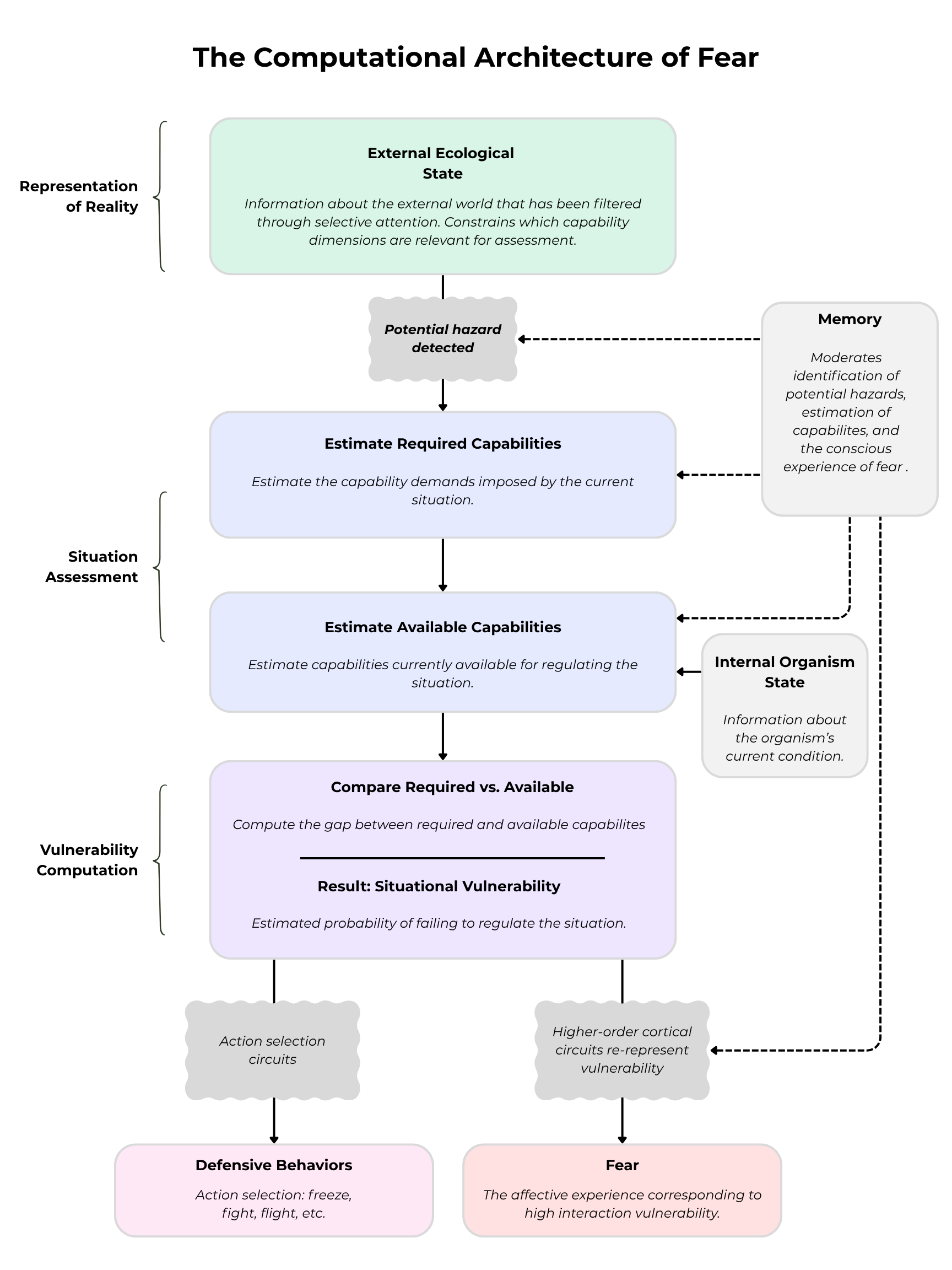
The Computational Architecture of Fear
Despite being a frequent topic of investigation, the nature of fear is hotly debated. Informed by my evolutionary background, work on formidability, and research on the horror genre, I am developing a computational architecture of fear. My model proposes that external information about the environment is combined with information about an organism's internal state to produce two estimates: what a situation requires to be handled successfully, and what capabilities are currently available to handle it. The comparison between these two estimates yields a measure of situational vulnerability whereby higher vulnerability produces defensive behavior (e.g., freeze, fight, flight) and the conscious experience of fear. I am currently working on refining the tenets of the model for a theoretical paper.
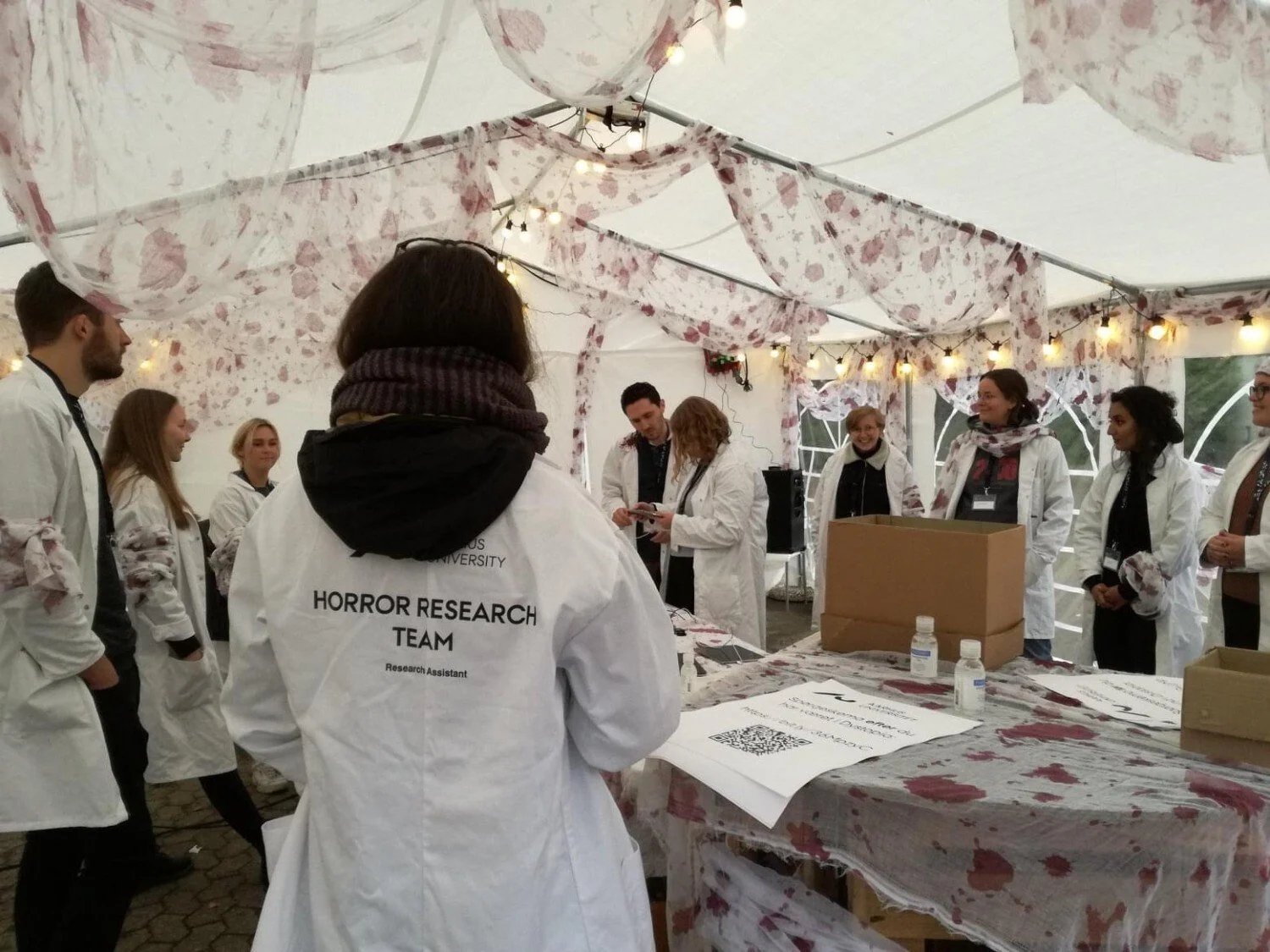
The Psychological Nature of Scary Play
My work on scary play examines why humans voluntarily engage with fear in recreational contexts, such as horror films and haunted attractions, and how this impacts our psychological functioning and well-being. Some of my fieldwork at haunted attractions has identified a “sweet spot” for fear in a playful setting and has shown that this kind of play is associated with distinct psychological benefits. My work has also shown that those who engage in scary play sometimes exhibit higher levels of psychological resilience to stressful situations. Contrary to common wisdom, my research also shows that those who enjoy a good scare do not have lower levels of empathy or prosocial behavior. Current work in this research area looks at possible ways in which scary play might be harnessed to serve as an anxiolytic and build resilience. I am also interest in how scary play can serve as a simulated testing ground for potential cooperative and romantic partners.
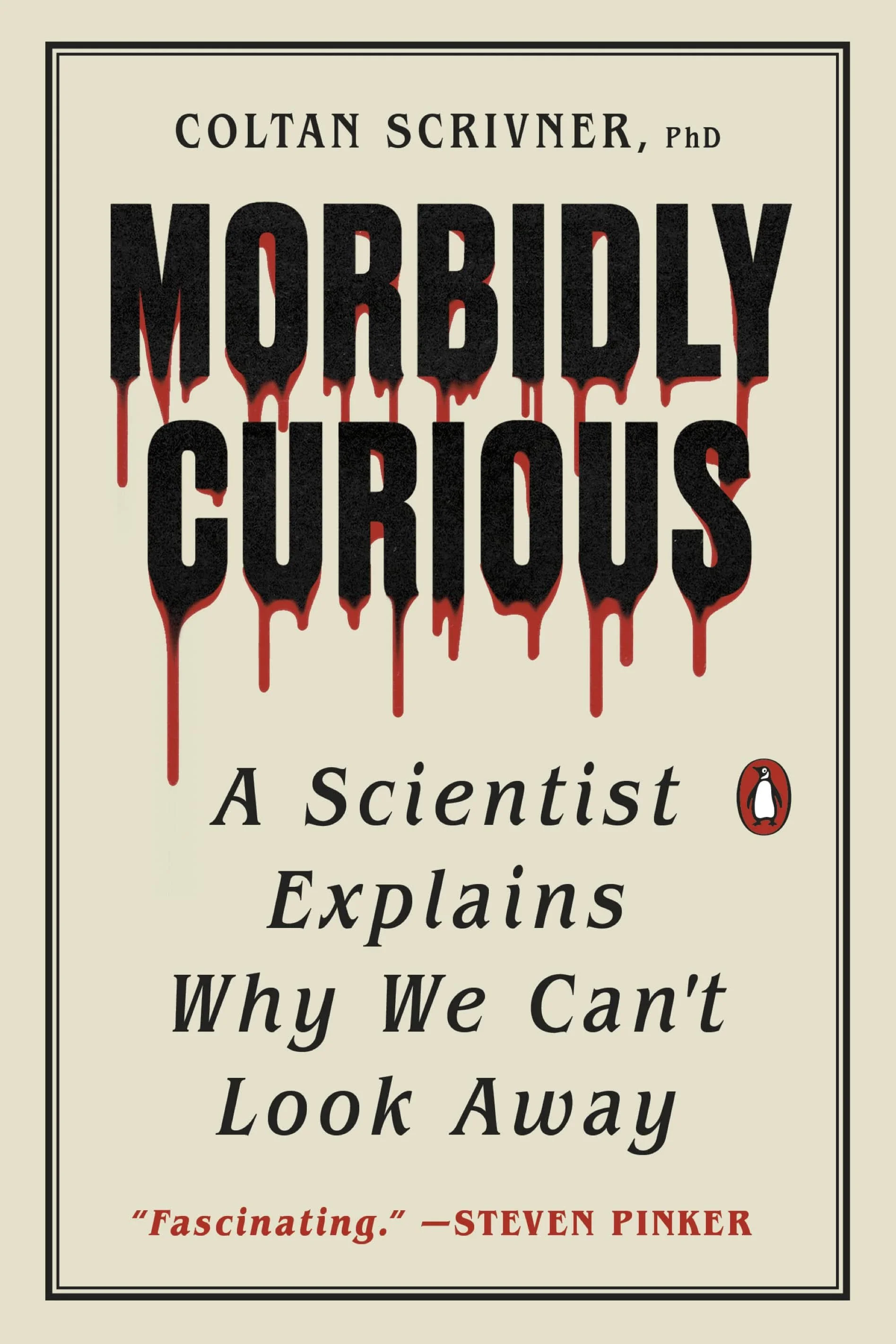
The Psychology of Morbid Curiosity
This line of research extends from my doctoral dissertation, in which I defined morbid curiosity and created and validated the Morbid Curiosity Scale as a way to measure trait levels of morbid curiosity. Stated simply, morbid curiosity refers the tendency to seek out information about potential danger. The degree to which someone is morbidly curious has been found to be a powerful predictor of their interest in frightening media such as true crime and horror. While most of the work has focused on media preferences, morbid curiosity has also been found to influence one’s interest in conspiracy theories and women’s interest in “bad boys” (i.e., men with high dark triad traits) as potential mates. My initial body of work on this topic culminated in a popular science book, in which I explore several other hypotheses, speculations, and open questions about morbid curiosity. My current work on this topic includes temporal shifts in morbid curiosity, developing an instrument suitable for children, and identifying how morbid curiosity relates to life choices like romantic partners and occupations.

Social Cognition Under Threat
A central question in my research is how perceived threat leads to a reorganization of social cognition, including empathy, moral judgement, and social behavior. This work spans two related lines. The first is emotion-based, looking at the functional logic of hatred. As part of this work, my colleagues and I developed the neutralization theory of hatred. In testing the predictions derived from this theory, we found that hatred is functionally distinct from anger in both its elicitors and behavioral outputs, suggesting that it solves a distinct type of social problem.
The second line of work in this area grew out of my research on horror fans. My work has shown that horror fans score normal on various measures of empathy, and yet they also score high in trait levels of psychopathy — with the notable exception of coldheartedness, in which they score lower than average. Evidence is also accumulating that empathy may not be as central to subclinical psychopathy as previously thought, and that psychopathy itself is poorly understood. Based on this, I am developing the Facultative Threat-Management Model of human cognition. This model proposes that perceived threat produces a temporary, coordinated shift in empathy, moral judgment, and social cognition in psychologically normal individuals that resembles what we call psychopathy. In other words, subclinical psychopathy may reflect the ability to don a mask of insanity rather than a mask of sanity. I am currently working on developing the theoretical tenets of the model and conducting pilot work to test predictions derived from it.